Kitchen Scales That Make Baking Easier
Weighing flour beats scooping it. See what features a baking scale needs, how much capacity and precision matter, and which styles are worth a look.
Our pick Slim digital kitchen scale, 11 lb capacity, 1 gram steps, tare button
It is accurate enough for bread and cakes, cheap, and small enough to live in a drawer.
We may earn a commission if you buy through links in this guide. How we make money
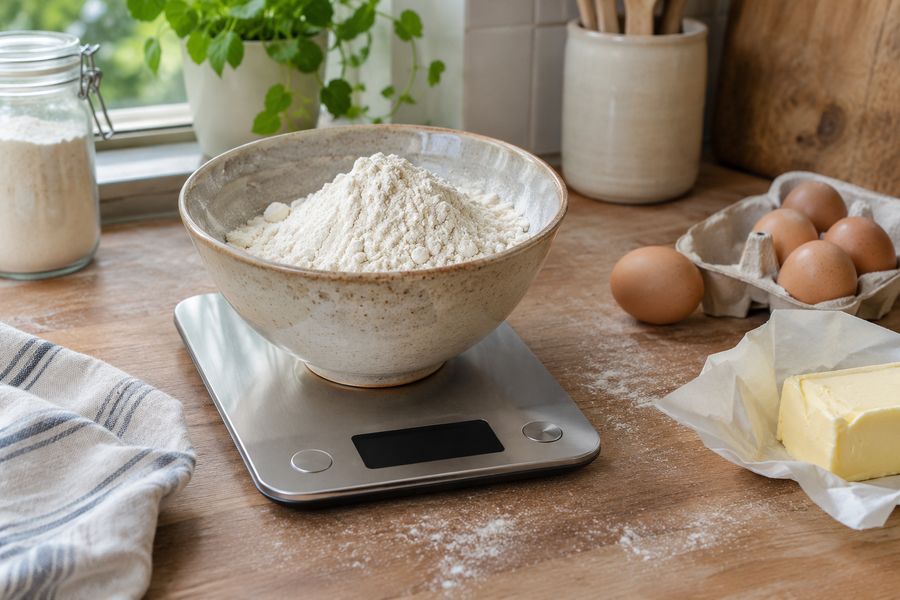
A cup of flour can weigh quite different amounts depending on how you scoop it. That is why cakes come out dense one week and fine the next. A kitchen scale takes the guesswork out, and it makes cleanup easier because you can pour everything into one bowl.
For baking, buy a digital scale that reads in 1-gram steps, has a tare button and holds at least 11 pounds (5 kg). You can spend more, but you rarely need to.
Features that matter
Tare (zero) button
Place a bowl on the scale, press tare, and the display resets to zero. Add flour, press tare again, add sugar. This is the main reason a scale is faster than measuring cups.
Precision
1 gram works for most recipes. If you make coffee, spices or yeast in very small amounts, a 0.1-gram scale is useful, though those usually have a lower weight limit, around 500 grams to 3 kg.
Capacity
Around 11 pounds (5 kg) lets you weigh a heavy mixing bowl plus ingredients. Anything below 2 kg can run out fast with a big ceramic bowl.
Units
Grams, ounces and pounds, plus milliliters on some models. Metric is easier for baking, since it uses whole numbers.
Display and platform
A readable backlit display that is not hidden by a large bowl. A flat platform, or a pull-out display, helps. Glass tops are easy to wipe.
Power and auto-off
Replaceable batteries or USB charging. A timeout of a few minutes is fine, but too short and the scale turns off mid-recipe.
Styles compared
| Style | Pros | Cons |
|---|---|---|
| Slim glass-top scale | Cheap, easy to clean, stores flat | Small platform |
| Scale with a pull-out display | Large bowls do not hide the numbers | More moving parts |
| Stainless platform scale | Durable and wipeable | Slightly pricier |
| High-precision 0.1 g scale | Good for coffee and small amounts | Low maximum weight |
| Bluetooth or app scale | Guided recipes and timers | Needs an app, extra to go wrong |
Widely sold lines include OXO Good Grips, Escali, Ozeri and Etekcity.
How to use a scale for baking
- Put your mixing bowl on the scale and press tare.
- Add the first ingredient until the display shows the recipe amount.
- Press tare, add the next ingredient.
- For sticky items such as honey or peanut butter, weigh directly in the bowl instead of scraping a spoon.
- Keep the scale on a hard, flat counter. A towel underneath can throw off readings.
If you are converting a family recipe, weigh a cup of flour once and write the number on the recipe card. A common rule of thumb is about 120 grams per cup of all-purpose flour, though brands vary.
Beyond baking
- Portioning pasta and rice.
- Splitting dough into equal pieces.
- Weighing coffee beans for a pour-over.
- Checking that a package really is the size it says.
If baking is turning into a habit, our guide on stand mixers vs. hand mixers is a good next read.
Common problems and easy fixes
- Numbers drift. Usually a weak battery or an uneven surface. Replace the battery and move the scale to a hard counter.
- It says "Err" or "Lo". The bowl is too heavy, or the battery is low. Check the weight limit on the label.
- Display hidden by the bowl. Choose a model with a pull-out display, or use a smaller bowl.
- Readings jump around. Fans, vibration and a stand mixer running nearby can upset the sensor. Weigh first, then start the mixer.
- Sticky buttons. A glass or flat membrane top with sealed buttons resists flour and spills better.
Switch units on the scale until the recipe lines up, but try to stay with one system per recipe. Mixing grams and ounces in the same bowl is where mistakes creep in. If a recipe lists only cups, look up a gram conversion from a trusted baking source and write it on the card.
Quick answers
Do I need a scale if I use cups?
Cups work for forgiving recipes. For bread, cakes and cookies, a scale gives more consistent results.
Are cheap scales accurate?
Most are accurate enough for home cooking. Check with a known weight, such as a new nickel, which weighs 5 grams.
How do I clean it?
Wipe with a damp cloth. Never submerge it. Dry before storing.
The bottom line
A basic digital scale with a tare button is one of the cheapest ways to improve baking. Pick a slim 11-pound model, learn to use tare, and measure in grams. It does not need to be fancy to do the job.