Cutting Boards That Are Kind to Your Knives: Wood, Bamboo or Plastic
Your cutting board decides how long your knife edge lasts. Compare wood, bamboo and plastic boards on edge wear, upkeep, hygiene and the space they take.
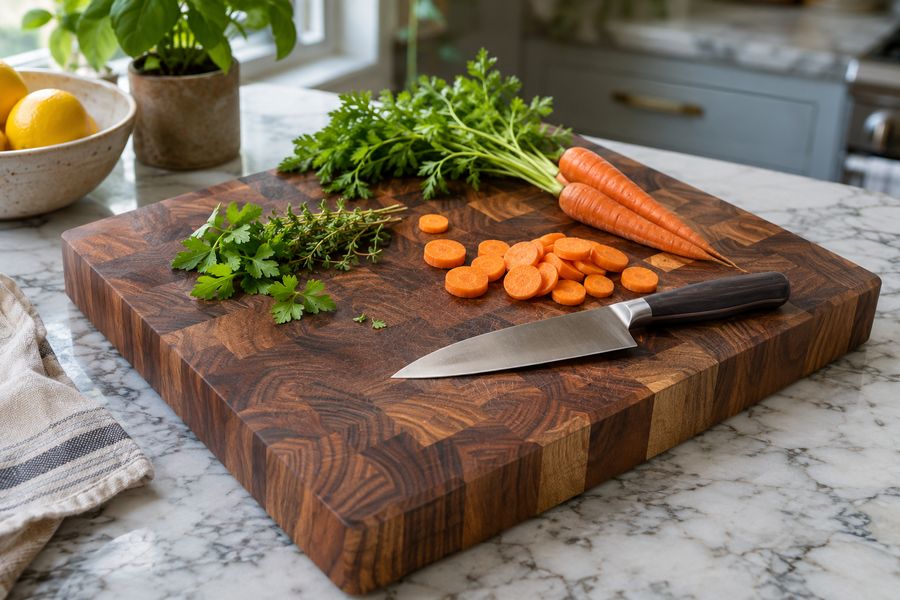
Our pick Thick end-grain or edge-grain hardwood cutting board
Hardwood is gentle on knife edges and, with oiling, lasts for years.
We may earn a commission if you buy through links in this guide. How we make money
The board under your knife decides how often you will sharpen it. A soft, slightly springy surface lets the edge sink in a little. A hard, glassy one dulls it fast.
For most home cooks, a thick wooden board is the best everyday choice. Add a thin plastic board for raw meat and fish, and you have a setup that is easy on knives and easy to clean.
Wood, bamboo and plastic compared
| Material | Knife friendliness | Upkeep | Dishwasher | Best for |
|---|---|---|---|---|
| Hardwood (maple, walnut, cherry) | High | Hand wash, oil now and then | No | Daily prep: vegetables, bread, herbs |
| End-grain wood | Highest, edge slips between fibers | More oiling, heavier | No | Heavy chopping and carving |
| Bamboo | Medium, harder than most woods | Hand wash, light oiling | No | Light prep, budget buyers |
| Plastic (HDPE) | Medium to high, softer ones are gentler | Easy | Usually yes | Raw meat, fish, poultry |
| Glass, marble, stone | Poor | Easy | Varies | Serving only, not cutting |
Wood: the one most cooks keep
Maple is the classic choice: tight grain, firm but forgiving. Walnut and cherry are slightly softer and darker. All three work well.
Edge-grain boards are made from long strips glued side by side. They are strong, sit at a fair price and suit most kitchens. End-grain boards are built from small blocks with the grain pointing up, like a butcher block. The knife edge slides between fibers, which is why many cooks rate them kindest to blades. They are heavier and cost more.
Look for thickness of at least 1.5 inches, rubber feet or a non-slip mat, and a juice groove if you carve meat. Brands such as John Boos, Teakhaus and Epicurean are well-known lines to compare.
Bamboo: lighter and cheaper, with a catch
Bamboo is technically a grass, and boards are made from compressed strips. It is harder than most woods, so it can dull edges faster. Many people buy a bamboo board for its price and light weight, and for light jobs it does fine. Check that the glue is food-safe and the seams are tight.
Plastic: the practical raw-meat board
High-density polyethylene boards go in the dishwasher, which makes them a simple choice for raw chicken and fish. Choose a board that is thick enough not to warp. Replace it when it is covered in deep scars, which can hold food residue. OXO and Cuisinart both sell widely available sets.
Care that keeps boards going
- Wash wood by hand with warm soapy water and dry it standing on its side.
- Never soak it or put it in a dishwasher.
- When the surface looks dry or pale, rub on food-grade mineral oil, let it soak in, and wipe off the extra.
- Wipe a damp towel under the board so it does not slide.
- Sand off deep scratches on wood. Replace plastic when it is badly grooved.
A sharp knife needs a good edge to begin with, and we covered the options in knife sharpeners compared.
Sizes and features to look for
Size changes how a board feels in daily use more than most buyers expect.
- Main board: 12 by 18 inches or larger, so a whole onion and a pile of slices fit without spilling.
- Small board: About 8 by 10 inches for garlic, lemons or a quick sandwich.
- Thickness: A thin board warps and slides. Thick boards stay put and can be flipped.
- Juice groove: Handy for roasts, fruit and tomatoes. A groove on both sides is better than one.
- Handholds: Cut-out grips make a heavy board easier to lift and carry to the sink.
Weight is a trade-off. A heavy end-grain block will not move, but you may not want to lift it daily. If space is tight, an edge-grain board of moderate size is easier to store upright beside the stove.
Finally, think about where you will put it. Boards that live on the counter can be larger and heavier. Boards that live in a cabinet should be light enough to pull out without thinking about it.
Quick answers
Is wood really sanitary?
Wood can be kept clean with regular washing and drying. Use a separate board for raw meat and wash it with hot soapy water. If you want guidance, food safety agencies publish basic handling rules.
What size should I buy?
At least 12 by 18 inches for a main board. Smaller is fine for a second board, but a tiny board makes chopping messy.
Do I need more than one?
Two is plenty: one wood board for produce and bread, one plastic board for raw meat.
The bottom line
Buy one thick hardwood board for daily use and a cheap plastic one for raw meat. Skip glass and stone for cutting. Oil the wood every month or two, and your knives will stay sharper for longer.