Enameled or Bare Cast Iron? Choosing a Dutch Oven You'll Use Weekly
Enameled and bare cast iron Dutch ovens compared on care, cooking and cost, with advice on size so the pot you buy gets used every week, not stored in a cupboard.
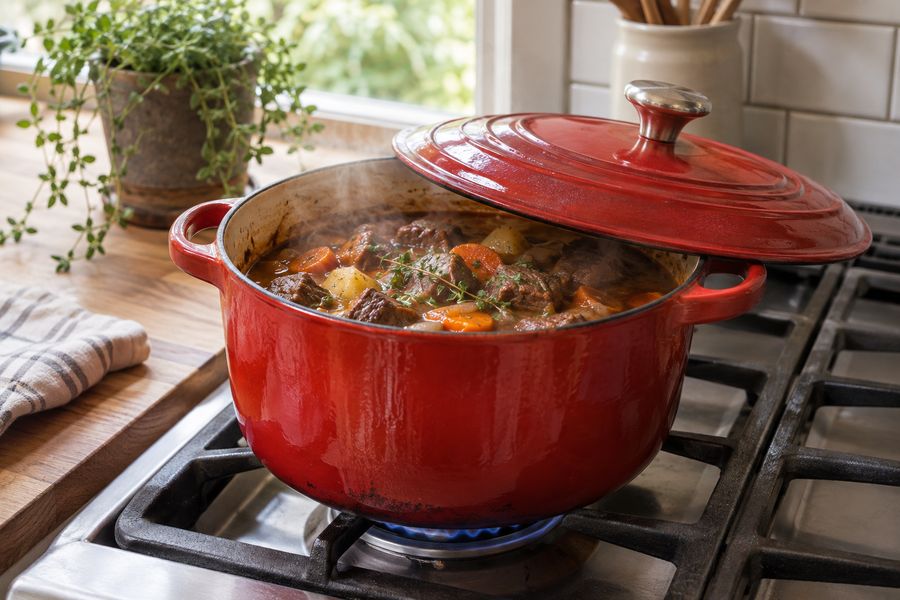
Our pick Lodge 6-quart enameled Dutch oven
It has the heat-holding weight of cast iron with an easy-clean enamel finish at a mid-range price.
We may earn a commission if you buy through links in this guide. How we make money
For most home cooks, an enameled Dutch oven is the easier choice. You can simmer tomato sauce and wine in it, wash it with soap and skip seasoning. Bare cast iron is cheaper, tougher and better for campfires, but it asks for more care.
Both do the same job: hold heat steadily for braises, soups, bread and stews. The question is how much upkeep you want.
Enameled cast iron
An enameled pot is cast iron with a glass-like coating baked on. The coating means nothing sticks as badly, nothing rusts and acidic foods do not react with the iron. Light-colored interiors also let you see how food is browning.
The downsides are weight, cost and chips. Hitting the rim with a metal utensil can chip the enamel. Metal tools and sudden temperature changes are the usual cause. Use wood or silicone utensils and let the pot cool before washing.
Well-known lines include Le Creuset and Staub at the premium end, and Lodge's enameled range at mid-price.
Bare cast iron
A bare Dutch oven is seasoned with oil, which builds a slick, dark coating over time. It handles very high heat, can sit in a campfire's coals and lasts for decades if cared for. Lodge's classic seasoned Dutch oven is the common example.
The trade-off is upkeep. You dry the pot after washing, rub on a thin layer of oil and avoid long simmers of acidic food, which can strip the seasoning and add a metallic taste. It also needs more attention when you store it.
Side by side
| Enameled | Bare | |
|---|---|---|
| Care | Wash with soap; avoid metal tools | Season, dry and oil after each use |
| Acidic foods | Fine | Best avoided for long simmers |
| Price | Mid-range to premium | Budget to mid-range |
| Campfire use | Not ideal | Yes |
| Bread baking | Excellent, easy release | Excellent, needs preheating |
Pick a size you will use
- 3 to 4 quarts: one or two people, small braises and side dishes.
- 5 to 6 quarts: the most flexible size; fits a whole chicken or a family-size stew.
- 7 quarts and up: big batches and entertaining, but heavy to lift when full.
Round pots suit stove-top cooking. Oval ones fit roasts and long cuts of meat. Check the lid and handles too, because some knobs are only rated to a certain oven temperature.
If you cook a lot, a good knife and board matter as much as the pot. See our guide to cutting boards for the next step.
What to cook in it each week
A Dutch oven earns its space with everyday meals, not only holiday roasts. Brown chicken thighs and finish them in the oven. Simmer a big pot of chili or bean soup on Sunday and eat it for days. Bake a no-knead loaf in the preheated pot for a crisp crust. Cook a pot of rice, braise short ribs or make a batch of pasta sauce.
Preheat gently over medium heat, since cast iron heats slowly and keeps the heat. High burners are rarely needed. Once the pot is hot, lower the flame and let it do the work. For cleanup, soak stuck food in warm water rather than scraping hard. A nylon scraper is safe on both enamel and seasoned iron.
Storage, weight and handling
A 6-quart pot can weigh well over 10 pounds empty, and more once it is full of stew. Check that you can lift it comfortably with two hands, and that the handles are wide enough for oven mitts. Store it where you can reach it without lifting other things off the top; a pot that is hard to reach is a pot you will not use.
Put a paper towel or a pot protector between the pot and its lid in the cupboard, so the enamel rim does not chip. If you pick bare iron, keep the lid slightly ajar to let air circulate and avoid musty smells. Heat the oven with the pot inside when baking bread, and use thick mitts when you pull it out.
Quick answers
Can I use an enameled Dutch oven on any stove?
Yes, including gas, electric and induction. Lift it rather than sliding it on a glass cooktop to avoid scratches.
Is a cheaper enameled pot as good as a premium one?
The cast iron underneath holds heat much the same. Premium pots usually have thicker, more durable enamel and a longer warranty.
Can I fix a chip in the enamel?
A small chip on the outside is usually cosmetic. Inside, it can expose iron, so many makers advise replacing the pot.
The bottom line
If you cook soups, sauces and braises, buy a 5 to 6 quart enameled Dutch oven and use it weekly. Choose bare cast iron if you cook outdoors or like the seasoning ritual and want to spend less.