Walking Pads and Under-Desk Treadmills: Who They Suit
A walking pad turns desk hours into easy steps, but it is not right for everyone. Here is who benefits, what to check on the spec sheet, and the main types.
Our pick Foldable walking pad with a 2.5 HP-class motor and remote
It stores flat, runs quietly at walking speeds, and covers what most desk walkers need.
We may earn a commission if you buy through links in this guide. How we make money
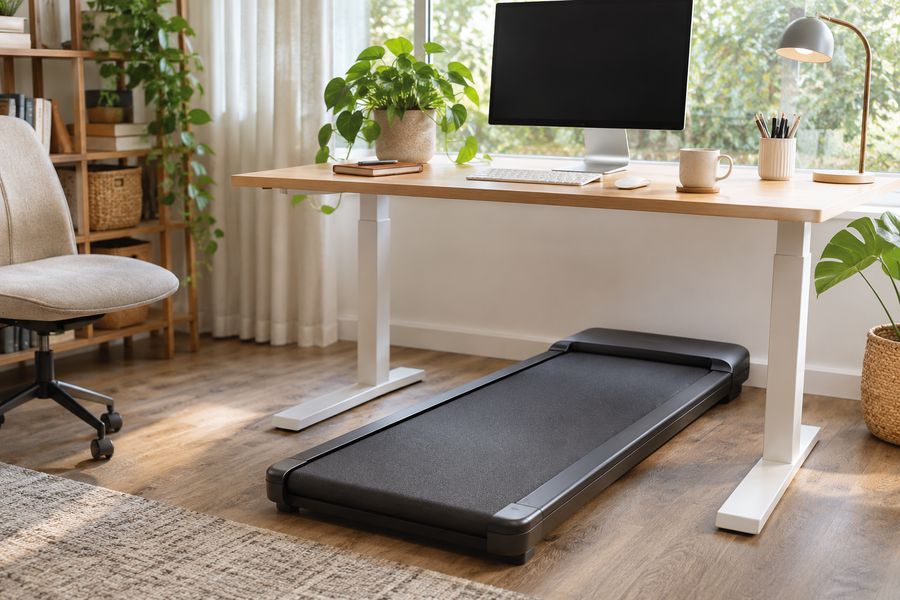
A walking pad is a slim, motorized belt built for slow, steady walking, usually between about 1 and 4 mph. Put it under a standing desk and you can take calls, answer email or watch a meeting while you move.
It suits people who work from home, own an adjustable desk and want low-effort movement. It is a poor fit for runners, tiny apartments with thin floors, or anyone who needs fine motor control while typing and has not tried it first.
Walking pad, under-desk treadmill, or full treadmill
The terms overlap, so here is how shoppers usually sort them.
- Walking pad: No handrail, folds flat, light enough to slide under a sofa or bed. Speed tops out low.
- Under-desk treadmill: Similar, but often with a slightly longer belt, a sturdier frame, and sometimes a small handle bar for balance.
- Standard treadmill: Built for jogging and running, with a bigger motor, bigger footprint and much more weight.
If walking is the plan, the first two are enough. A full treadmill rarely makes sense in a work nook.
What to check before buying
Belt size
Look for a belt around 40 inches long and 16 to 20 inches wide. Shorter belts feel cramped, especially for taller people with a longer stride.
Weight capacity
Choose a model rated comfortably above your weight. A higher rating usually means a stronger frame and motor, not just a bigger number on the box.
Noise
Quiet matters if you take video calls. Listed decibel figures vary by brand and test method, so lean on written user feedback about motor hum and belt slap rather than the spec alone.
Height and clearance
Measure the gap under your desk, then add your shoe thickness. Some walkers like a desk raised to elbow height when standing, which usually sits a bit higher than a normal typing height.
Storage and moving
Folding frames with built-in wheels make a big difference if the pad has to move out of the way daily.
Models and styles worth comparing
| Style | Pros | Watch for |
|---|---|---|
| Basic folding walking pad, no handle | Lowest cost, stores flat | No handle for balance, shorter belt |
| Folding pad with remote and app | Speed changes without bending down | App features you may not use |
| Under-desk model with handle bar | More stable for new walkers | Handle can bump your desk |
| Brand lines such as WalkingPad, Sperax or UREVO | Widely sold, parts and manuals easy to find | Models change often, so verify specs on the current listing |
Browse a few options:
Getting started without wrecking your workday
- Start at the lowest speed, around 1 mph, and walk 10 to 15 minutes at a time.
- Do easy tasks first: reading, calls, browsing. Save precise mouse work for later.
- Keep your monitor at eye level so your neck stays neutral.
- Wear flat, cushioned shoes. Walking in socks works for some people but offers less grip.
- Build up gradually. Over a few weeks, many users extend sessions as the habit settles in.
If you are also thinking about a desk setup that supports longer days, our post on better video calls covers cameras and lighting for the same home office.
Who should skip one
A walking pad is not for everyone, and it is better to know that before it takes up floor space.
- Shared or thin-floored apartments. Footfalls and motor hum travel. Test at low speed, and ask the neighbors below if you are unsure.
- Very small desks. You need room for your elbows and a stable monitor. A wobbling desk makes walking and typing worse.
- People with balance or joint concerns. A doctor or physical therapist can tell you whether a moving belt is a good idea.
- Anyone who wants a real run. Walking pads are built for gentle speeds. Pushing them harder wears the motor and is not what they are made for.
Also check the return policy before you buy. A pad that sounds fine in a listing can feel different in your room, and a fair return window removes most of the risk.
Quick answers
Can I really type while walking?
Most people can at slow speeds, though accuracy dips at first. Try it for a few days before judging.
Will it damage my floor?
Not by itself. Place a mat underneath to catch vibration and protect hardwood. Renters in apartments with downstairs neighbors should test noise at low speed first.
Is it a substitute for exercise?
It adds daily movement, which is useful. For specific health goals or conditions, check with your doctor before starting a new routine.
The bottom line
A walking pad is worth it for home-office workers who already like to stand and want gentle, regular movement. Pick a folding model with a decent belt length and a remote. Skip it if you want to run, or if you doubt you will actually step on it. Buy for the habit you have, not the one you hope for.