Resistance Bands: A Full-Body Workout That Fits in a Drawer
Resistance bands cost little and store anywhere. Learn the main band types, how to pick a resistance level, and a simple full-body routine to start with.
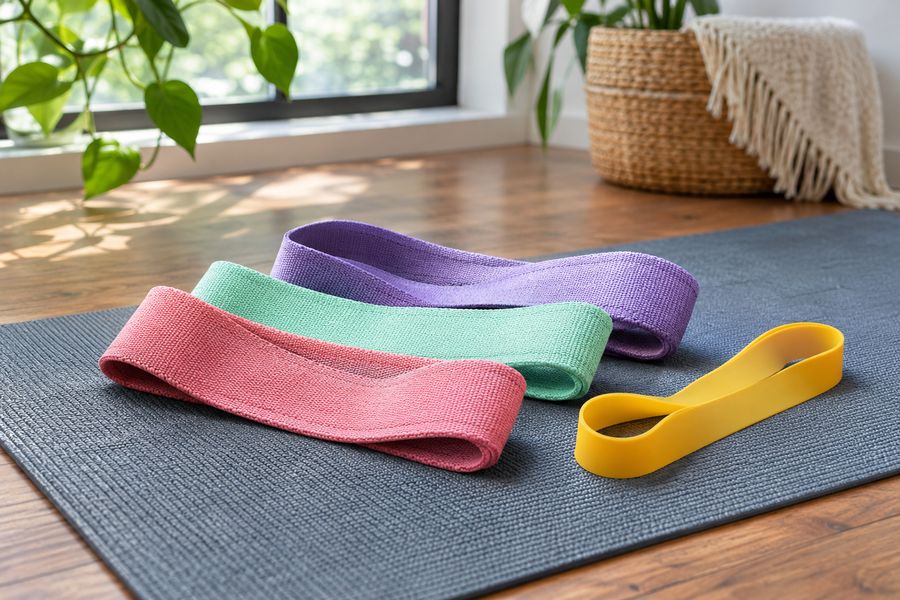
Our pick Set of loop bands in light, medium and heavy resistance
Three levels cover most beginner moves, and loops work for legs, glutes and shoulders alike.
We may earn a commission if you buy through links in this guide. How we make money
Resistance bands are stretchy straps or loops that make your muscles work harder as you pull. They weigh almost nothing, cost far less than dumbbells, and tuck into a drawer or a suitcase.
For a beginner, a three-band set (light, medium, heavy) plus a pair of handles or a door anchor covers legs, back, chest, shoulders and arms. You will not match a full gym, but you will build a base and keep a routine going anywhere.
The four band types, and what each is for
Loop bands (mini bands)
Short closed loops, about 12 inches around. Worn above the knees or around the ankles, they add tension to squats, glute bridges and lateral steps. Fabric versions are wider and slip less than thin latex.
Long loop bands (power bands)
Thick, long loops that can be anchored or stepped on. These handle pull-ups assistance, rows, presses and heavier leg work. Resistance runs higher than mini bands.
Tube bands with handles
Round tubes with grips on each end, often with a door anchor. They mimic cable machines and feel familiar for rows, curls and presses.
Flat therapy bands
Wide, flat strips without handles. Often used in physical therapy and gentle mobility work. A physical therapist is the right person to ask which one fits an injury.
Choosing a resistance level
Brands label levels differently, so a "medium" from one company may feel like another's "heavy." Use this rule instead: you should be able to do 10 to 15 clean repetitions, with the last two feeling tough but not sloppy. If you finish easily, move up. If your form breaks, go down.
| Band | Good for | Typical use |
|---|---|---|
| Fabric loop set | Glutes, hips, legs | Squats, bridges, side steps |
| Long loop (power band) | Back, shoulders, assisted pull-ups | Rows, presses, pull-aparts |
| Tube with handles and door anchor | Chest, arms, back | Presses, curls, pulldown-style moves |
| Flat therapy band | Rehab, mobility | Gentle shoulder and ankle work |
A starter pick:. Popular makers include TheraBand, Fit Simplify and Whatafit, though any set with clear resistance labels and sturdy stitching or seams works.
A simple full-body routine
Do each move for 10 to 15 reps, rest about a minute, and go through the list two or three times. Three days a week is a fine start.
- Banded squat (loop above knees): push the knees out against the band.
- Glute bridge (loop above knees): lift hips, squeeze, lower slowly.
- Standing row (tube anchored at chest height): pull elbows back, squeeze shoulder blades.
- Chest press (tube anchored behind you): press forward at chest level.
- Overhead press (stand on the band): press up from the shoulders.
- Band pull-apart (long loop or flat band): hold at chest height, pull the ends apart.
Warm up first with a few minutes of walking or arm circles. If you are looking for a way to wind down afterward, our guide on foam rollers and massage guns covers recovery tools.
Safety and care
- Inspect bands before each use. Nicks, thin spots or sticky surfaces mean it is time to replace them.
- Anchor to something solid. A properly closed door works, a flimsy one does not.
- Keep bands out of direct sun and away from sharp edges.
- If you have a latex allergy, look for latex-free fabric or TPE options.
Making the routine harder over time
Bands do not have a number you can add like a weight plate, so progress takes a few tricks.
- Slow down. Take three seconds to lower on each rep. The muscle works longer under tension.
- Pause. Hold the hardest point of the move for a count of two.
- Step wider. Standing farther from the anchor point increases the pull.
- Double up. Use two bands together for a heavier load.
- Add reps or sets. Go from two rounds to three before you buy a heavier band.
Keep a simple note on your phone: the date, the band color and how many clean reps you did. After a month, you will see whether the work is getting easier, and that is the signal to move up a level.
Quick answers
Can bands build real strength?
They can, especially for beginners. As you get stronger, use heavier bands, slow the reps, or add a pause at the hardest point.
Do bands work for older adults?
Many people use them for gentle strength work. Check with a doctor or physical therapist if you have joint concerns or a medical condition.
How many bands do I need?
Three levels of loops plus one tube set with handles. You can add more later.
The bottom line
If space, budget or travel are your limits, bands are the easiest way to start strength training. Buy a clearly labeled set, choose a level that makes the last reps hard, and keep your form clean. They will not replace a barbell forever, but they will get you consistent, which counts for more.