Trail Runners or Hiking Boots for Day Trips?
Trail runners or hiking boots for day hikes? We compare weight, support, grip and waterproofing so you can choose the pair that fits your trails and your feet.
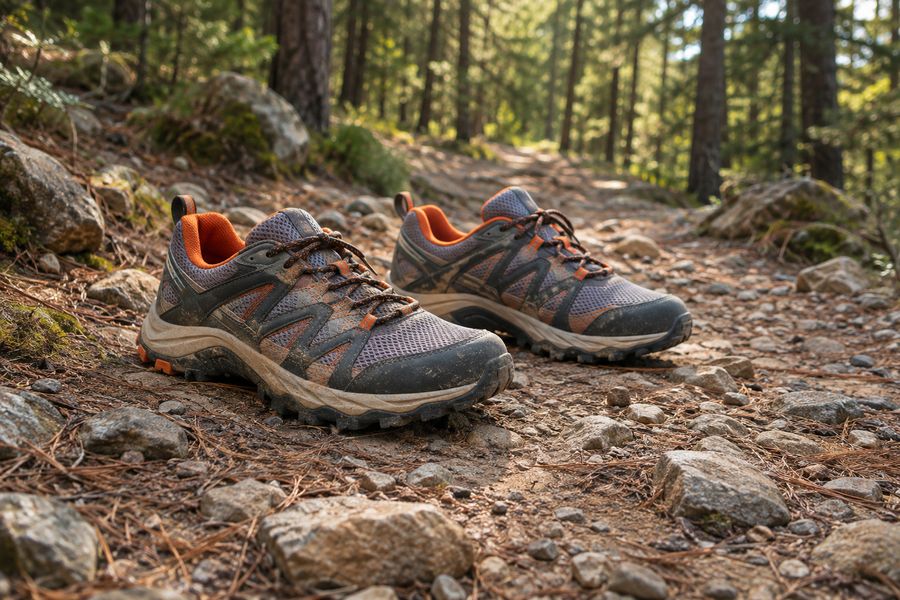
Our pick Cushioned trail running shoes with a grippy lugged outsole
They are light, dry quickly and handle most day-hike terrain with less foot fatigue.
We may earn a commission if you buy through links in this guide. How we make money
For most day trips on maintained trails, trail runners are the easier choice. They are lighter, they dry fast and they need little break-in. Hiking boots win when the ground is rough, the pack is heavy, or the weather is cold and wet.
The rest of this guide compares them side by side and explains how to check fit, which matters more than the category.
Head to head
| Trail runners | Hiking boots | |
|---|---|---|
| Weight | Light, less effort per step | Heavier, more tiring over long miles |
| Ankle support | Low, relies on your own strength | Higher cuff, better on uneven ground |
| Break-in | Little to none | Often several outings, especially leather |
| Drying time | Fast | Slow, especially waterproof types |
| Protection | Thin, so rocks can be felt underfoot | Stiffer midsole and a tougher toe cap |
| Best with | Light daypack, dry or mixed weather | Heavy load, snow, mud, scrambling |
When trail runners make sense
If your hikes are 3 to 10 miles on well-marked paths with a light daypack, trail runners are usually enough. Cushioned midsoles absorb impact, and a lugged outsole grips dirt and rock. Many hikers find that lighter shoes reduce tired legs by the end of a long day.
- Cushioned trail runners. A comfortable choice for longer days.
- Low-profile trail runners. Better ground feel, less padding, a good fit for experienced runners.
- Waterproof-membrane trail runners. Keep light rain out but run warmer and dry slower.
When boots are better
If you carry a heavy load, hike over loose rock, or face wet, cold or snowy conditions, boots provide structure. A taller cuff protects ankles from brush and debris, and a stiffer sole spares your feet from sharp rocks. People who have rolled ankles before often feel more secure in boots, though strong ankles matter more than height.
- Mid-height hiking boots. The most popular day-hike boot, with support and manageable weight.
- Light hiking shoes (low-cut hikers). A middle ground between runner and boot.
- Waterproof leather boots. Sturdy and long-lasting, but heavy and slow to dry.
Fit checklist
- Shop in the afternoon, when feet are a bit swollen, and wear the socks you hike in.
- Leave about a thumb's width in front of your longest toe, so toes do not hit the front on descents.
- Check that your heel stays put when you walk uphill.
- Walk down an incline in the store, or on a ramp if there is one. Toes should not jam forward.
- Choose socks to match: merino or synthetic blends, not cotton.
- Replace shoes when the tread is worn flat or the midsole feels dead.
Cooling down matters after a long hike. Our piece on foam rollers and massage guns covers recovery tools.
What else to carry
Footwear is only part of a good day trip. Carry water, a snack, a light rain layer and a map or offline route. A small first-aid kit with blister pads is cheap insurance. Trekking poles can take load off your knees on steep descents, and they steady you on loose ground, which narrows the gap between runners and boots. Check the forecast, tell someone your route, and turn around if conditions change.
Lacing helps fit, too. A heel-lock lacing pattern holds your heel in place on climbs, and loosening the laces a little on long descents gives toes extra room. Break in any new pair on a short local walk before the big day, so you find hot spots while you are still near the car.
Quick answers
Do I need waterproof shoes?
Only if you often hike in wet conditions. Waterproof shoes trap sweat and dry slowly, so many hikers pick breathable shoes and accept damp feet.
Can trail runners handle rocky trails?
Mostly yes. Look for a rock plate or firm midsole if the terrain is sharp, since thin shoes let you feel every stone.
How long do they last?
Trail runners often wear out sooner than boots. Replace either one when the cushioning is gone, not by a fixed mileage.
The bottom line
Start with cushioned trail runners if you hike in good weather on maintained trails with a light pack. Move to mid-height boots for heavy loads, rough terrain or cold, wet conditions. Whichever you pick, fit and socks matter more than the label. Try them on, walk a few steps downhill, and trust how your feet feel.