Lip Balms and Overnight Masks for Chapped Winter Lips
How to choose a lip balm for the day and a lip mask for the night, which ingredients to look for, and which habits make chapped lips worse each winter.
Our pick A petrolatum-based lip balm in a tin or tube
Petrolatum seals in moisture well and is widely used for dry lips.
We may earn a commission if you buy through links in this guide. How we make money
Winter air, wind and indoor heat all pull moisture from your lips. Lips have no oil glands of their own, so they dry out quickly. A balm for daytime and a thicker mask at night is a simple routine that works for most people.
Here is how to pick both, and what to avoid.
What helps chapped lips
Look for two types of ingredients:
- Occlusives that seal moisture in: petrolatum, beeswax, shea butter, lanolin, dimethicone.
- Emollients and humectants that soften: ceramides, glycerin, hyaluronic acid, plant oils such as jojoba.
A balm that combines both tends to feel best. Fragrance-free is a safe choice if your lips are sore or easily irritated.
Daytime lip balms
- Petrolatum-based balms: Vaseline and Aquaphor are widely known and affordable.
- Beeswax and plant oil balms: Burt's Bees is a popular line. Good for people who like natural formulas, though a few have strong flavors or scents.
- Balms with SPF: Sun can burn lips even in winter, especially after snow. Choose SPF 15 or higher if you spend time outdoors.
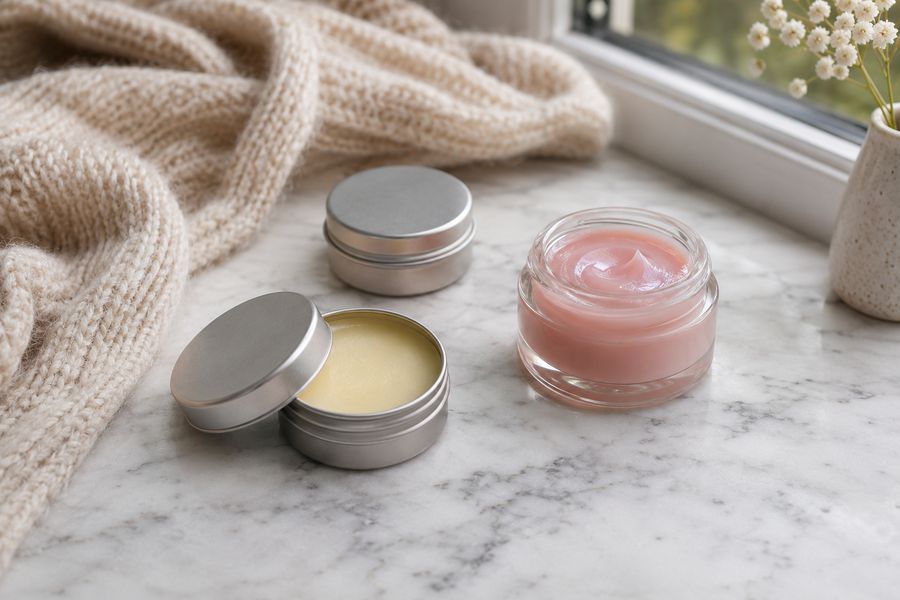
- Tins and pots: Thicker and more protective, but dip in with a clean finger.
Overnight lip masks
A lip mask is a thicker, richer product that sits on your lips while you sleep. It stays put better than a regular balm. Popular options include Laneige's Lip Sleeping Mask and similar jar products. Use a clean spatula or fingertip, and apply a thin, even layer. A plain petrolatum ointment can do the same job on a budget.
Comparison
| Product | When to use | Best for |
|---|---|---|
| Petrolatum balm | Day and night | Very dry or windburned lips |
| Plant oil and wax balm | Day | Light moisture, natural formulas |
| SPF balm | Outdoors | Walking, skiing, driving |
| Overnight mask | Bedtime | Deep overnight care |
Habits that make it worse
- Licking your lips. Saliva evaporates and leaves them drier.
- Peeling the dry skin. It opens small cracks. Let the balm soften flakes, then gently wipe with a damp cloth.
- Harsh scrubs. A gentle wipe is enough, and only now and then.
- Menthol, camphor and strong flavors. They can feel cooling but may irritate some people.
- Dry indoor air. A bedroom humidifier can help. See our guide on humidifiers for dry winter air.
Drinking enough water is a good general habit, though it is not a cure for chapped lips on its own.
A simple winter lip routine
- Morning: Apply a balm after brushing your teeth. If you will be outdoors, choose one with SPF.
- During the day: Reapply after eating, drinking or wiping your mouth. A balm in your coat pocket is easier to remember than one in a drawer.
- Evening: Wipe away any remaining product with a soft, damp cloth.
- Bedtime: Apply a thick layer of mask or ointment. Keep a spare tin by the bed.
Give a new routine a week or two before judging it. Lips repair slowly, and switching products every few days makes it hard to know what helps.
Reading the label
Ingredient lists can be long, so focus on a few things. Short lists are easier to scan if your lips react to products. Common irritants include strong fragrance, essential oils such as peppermint or cinnamon, and some sunscreen filters. If a balm stings or makes your lips feel tingly and dry afterward, stop using it. Patch test a new product on a small area first if you have a history of reactions.
Also remember that dry lips can be a side effect of some medicines, so if the problem started when you began a new medicine, a pharmacist or doctor can advise. For everyday winter chapping, a plain, bland balm used often is usually enough.
Quick answers
Why do lips get chapped so easily?
The skin on lips is thin and has no oil glands, so it loses moisture fast in cold, dry air.
Can I become dependent on lip balm?
There is no solid evidence of that. If lips stay dry despite using balm, the product may be irritating you, so try a plain, fragrance-free one.
When should I see a doctor?
If your lips stay cracked, sore or swollen for weeks, or if cracks form at the corners and do not heal, see a doctor or dermatologist. It could be an allergy or another condition.
The bottom line
Keep a simple petrolatum balm in your pocket for the day, and use a thick mask or ointment at night. Skip irritating flavors, stop licking, and add moisture to bedroom air. If problems persist, a doctor can check for other causes.