Humidifiers for Dry Winter Air: Cool Mist, Warm Mist and Size
Cool mist or warm mist, small or large tank: how to choose a humidifier for winter, what to watch for, and how to keep it clean, safe and quiet.
Our pick An ultrasonic cool-mist humidifier with a top-fill tank
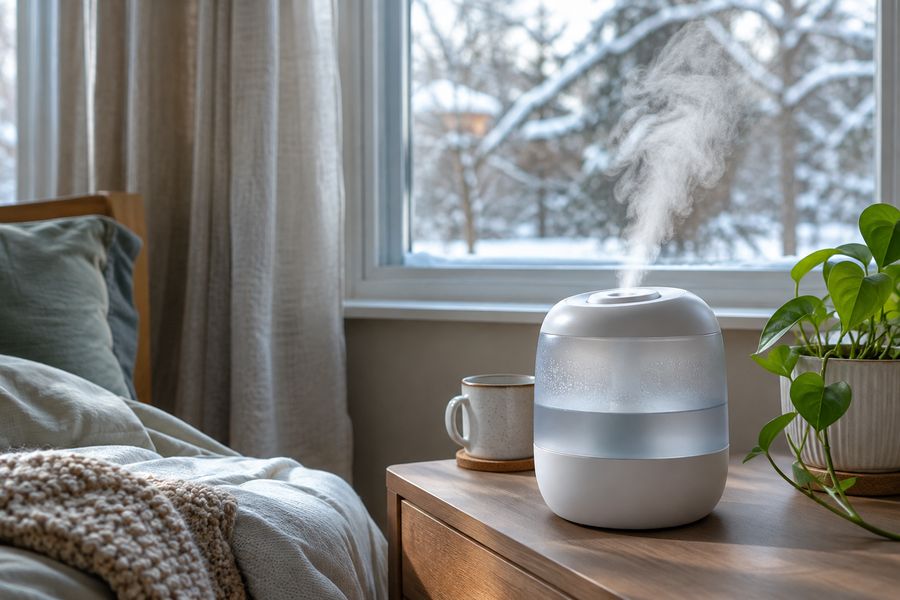
It is quiet, easy to refill and suits bedrooms and small rooms.
We may earn a commission if you buy through links in this guide. How we make money
Heating dries indoor air, and dry air can leave skin tight, lips chapped and wood furniture cracking. A humidifier adds moisture back. The main choice is cool mist or warm mist, and the second is the right size for your room.
Here is a short guide to both.
Cool mist or warm mist
- Ultrasonic cool mist: A vibrating plate turns water into a fine mist. Quiet, energy efficient and common. Use clean or filtered water, since minerals can leave white dust.
- Evaporative: A fan blows air across a wet wick. It is a bit louder, but it releases less mineral dust and slows when the air is already humid.
- Warm mist: Heats water to make steam. Some people like the soft warmth in a cold room. The hot water is a burn risk, so keep it away from children and pets.
For bedrooms and kids' rooms, most buyers choose cool mist for safety and quiet.
Pick the right size
A humidifier that is too small does nothing. One that is too large can make the room damp. Look at the maker's recommended room size and match it to yours.
| Room | Type to look for | Tank size |
|---|---|---|
| Small bedroom or nursery | Tabletop cool mist | About 1 gallon or less |
| Large bedroom or office | Larger cool mist or evaporative | 1 to 2 gallons |
| Open living area | Console evaporative | 2 gallons and up |
Most tabletop units run 8 to 24 hours per fill, depending on the setting.
Features worth having
- Top-fill tank. You pour water straight in, with no flipping.
- Built-in humidistat. It stops the unit at a set humidity.
- Auto shut-off. It turns off when the tank is empty.
- Easy-clean design. A wide opening and few small parts make cleaning less of a chore.
- Quiet mode. This is important for sleeping.
Popular lines include Levoit, Honeywell and Vicks, plus several slim models from other well-known makers.
Aim for moderate humidity
A comfortable range indoors is generally around 30 to 50 percent. Higher than that encourages mold and dust mites. A small hygrometer, which costs very little, tells you where you are. Wet windows or a musty smell mean the humidifier is doing too much.
Keep it clean
- Empty and rinse the tank daily, and refill with fresh water.
- Clean it with the method the maker recommends, usually a vinegar solution, every week or so.
- Replace wicks and filters on schedule.
- Never leave water sitting in an unused unit.
A dirty humidifier can spread bacteria and mold into the air. If someone in the home has asthma or allergies, ask their doctor before adding a humidifier. For related comfort, a clean room helps too. See our tips on air purifiers.
Signs your air is too dry
You do not need a gadget to notice dry air. Common signs include static shocks, dry or itchy skin, a scratchy throat on waking, chapped lips and gaps opening in wood floors or furniture joints. A hygrometer gives you an actual number, and many humidifiers include one.
If dryness is severe or causes nosebleeds or breathing trouble, mention it to your doctor. A humidifier is a comfort tool, not a treatment.
Where and when to run it
- Bedroom at night. The most common use. Run it on low and keep the door mostly shut so the room, not the whole house, gets humid.
- Home office. A small unit on a side table keeps the desk area comfortable.
- Whole-house options. Furnace-mounted humidifiers exist, but they need installation and upkeep, so they are a job for a heating professional.
Place the unit on a waterproof tray or a hard surface, not on carpet or wood furniture. If you see damp patches or condensation on windows, turn it down. Warm rooms hold more moisture than cold ones, so you may need less output on mild days.
Finally, check the price of refills. Some filters or demineralization cartridges are cheap, and others cost as much as a new unit over a few seasons. Washable parts and common filter sizes keep ownership costs down.
Quick answers
Can a humidifier help with a cold?
It may make the air more comfortable. For illness, follow your doctor's advice.
Is tap water OK?
Often, but hard water leaves mineral dust. Distilled or demineralized water avoids that.
Where should I put it?
On a hard, level surface a few feet from your bed, away from walls and electronics.
The bottom line
For a typical bedroom, an ultrasonic cool-mist humidifier with a top-fill tank and a humidistat is the sensible buy. Match the size to the room, aim for moderate humidity, and clean it often. That keeps the air comfortable without adding problems.