Air Purifiers: How to Read CADR, Filters and Room Size
Decode CADR ratings, HEPA and carbon filters, and room-size claims, so you can match an air purifier to your space and avoid paying for numbers you do not need.
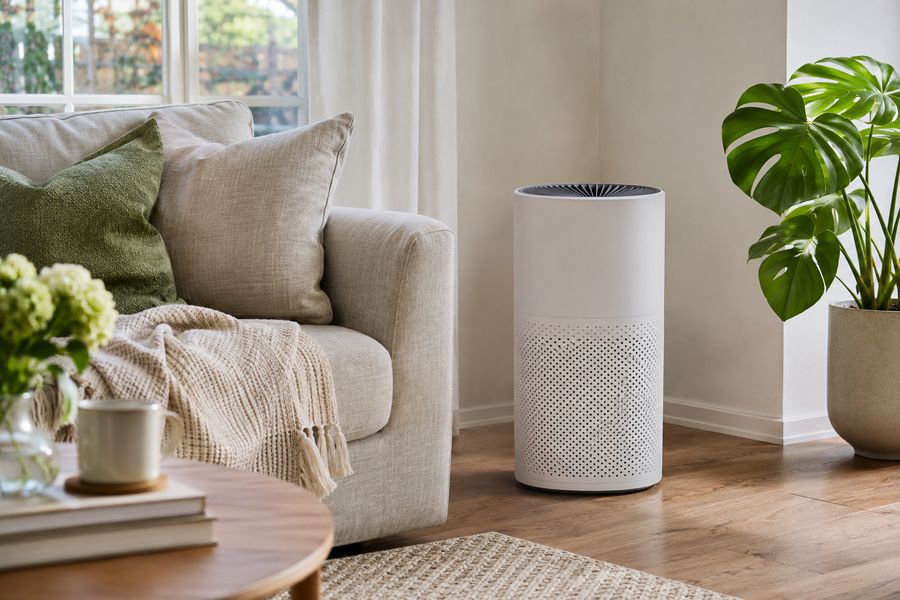
Our pick True HEPA air purifier with a carbon filter, sized to the room
True HEPA captures fine particles, carbon handles some odors, and correct sizing keeps it effective.
We may earn a commission if you buy through links in this guide. How we make money
An air purifier is only as useful as its fit for the room. The two numbers that matter are the CADR rating and the room size it was built for. Filters decide what it captures, and noise and running costs decide whether you keep it switched on.
Here is how to read the label without getting lost in marketing.
What CADR actually tells you
CADR stands for Clean Air Delivery Rate. It measures how much filtered air the unit delivers per minute, in cubic feet. Testing is usually reported for three particle types: smoke, dust and pollen. A higher number means faster cleaning of that particle type.
A common rule of thumb: the smoke CADR should be at least two-thirds of the room's floor area. A room of 300 square feet suggests a smoke CADR near 200. This assumes ceilings of around 8 feet, so go higher if yours are taller.
Many makers also print a maximum room size. That number is often calculated for one air change per hour, which is slow. For allergy or smoke concerns, look for a unit that can change the air several times an hour in your room.
Filters in plain terms
- Pre-filter. A coarse mesh that catches hair and large dust, protecting the main filter. Often washable.
- True HEPA. A dense filter standardized to catch very small particles. Look for the words "True HEPA". Terms like "HEPA-type" or "HEPA-like" are looser.
- Activated carbon. A bed of carbon that adsorbs some odors and gases. A thin carbon sheet does little. A thicker bed does more.
- Ionizers and UV add-ons. Some units produce ozone as a byproduct. Check whether the model meets California's ozone limits, and if in doubt, skip it.
Filters need replacing, usually every 6 to 12 months, and this is the real running cost. Check the price of replacements before you buy the machine.
Sizing by room
| Room | Rough floor area | What to look for |
|---|---|---|
| Small bedroom or office | Up to 150 sq ft | Compact true HEPA unit, quiet fan mode |
| Standard bedroom | 150 to 300 sq ft | Mid-size unit with a sleep mode |
| Living room | 300 to 500 sq ft | Larger unit with higher CADR and carbon |
| Open plan | 500 sq ft and up | Large unit, or two units in different zones |
These are broad ranges. Check each model's own CADR figures rather than trusting the range alone.
Types of purifier to consider
- Compact tower with true HEPA. Fits bedrooms and desks, and tends to be quiet.
- Large drum or cylinder unit. Draws air from all sides and suits big living areas.
- Smart purifier with an air-quality sensor. Adjusts the fan automatically, which can save energy.
- Purifier with a heavier carbon bed. A better choice for cooking smells or smoke.
Placement and habits
- Leave some space around the unit, usually 6 to 12 inches from walls and furniture.
- Close doors and windows while it runs so it cleans the same air.
- Run it continuously on a low speed rather than in short bursts.
- Check the noise rating. Under about 30 dB is comfortable for sleeping.
- Replace filters on schedule, or the unit slows and the smell returns.
Dry air is another common indoor complaint. Our guide to humidifiers for dry winter air explains how to size those.
Quick answers
Will an air purifier help with allergies?
It can reduce airborne particles such as pollen and pet dander, which may ease symptoms for some people. It is not a treatment, so talk to a doctor about persistent allergies or asthma.
Can I leave it on all night?
Yes, most are made for continuous use. Use sleep mode, which lowers fan noise and display light.
Do I need one in every room?
No. Start with the bedroom, where you spend the most hours, and add another only if the first does not cover your needs.
The bottom line
Choose a true HEPA purifier, match its smoke CADR to about two-thirds of your room's floor area, and add carbon if odors bother you. Check the filter cost and noise level before you commit. A properly sized, quiet unit that you actually leave running beats an oversized one that lives on mute.