An At-Home Manicure Kit That Covers the Basics
What to put in a simple home manicure kit, which tools are worth owning, and a six-step routine that keeps nails neat without a salon trip or a big bill.
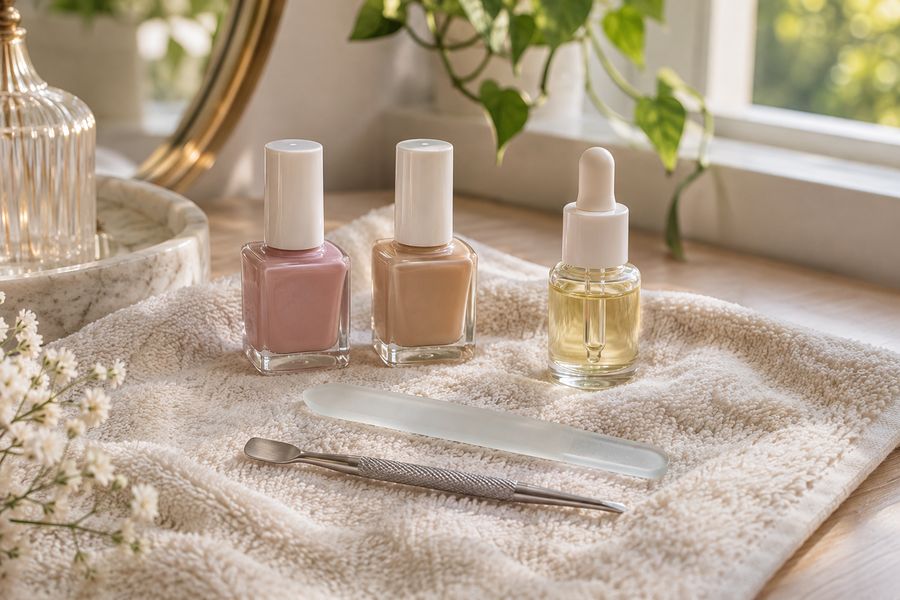
Our pick Glass nail file and cuticle pusher set
A glass file shapes gently without splitting nail edges, and a pusher handles cuticles without cutting them.
We may earn a commission if you buy through links in this guide. How we make money
A neat manicure needs fewer tools than you think. A file, a cuticle pusher, clippers, oil and a base and top coat cover almost everything. Anything beyond that is extra.
Here is what is worth owning, what to skip and a routine you can finish in about half an hour.
The core tools
- Nail clippers. Straight-edge clippers cut cleanly. Choose a pair with a solid, flat blade.
- Glass or crystal file. It seals the nail edge as it files, which helps prevent peeling. Emery boards are fine as a cheaper alternative; use a fine grit for natural nails.
- Cuticle pusher. A metal or silicone tip gently moves the softened cuticle back. Pushing is safer than cutting.
- Cuticle oil. Jojoba or almond-based oils soften and moisturize the area around the nail.
- Base coat, color, top coat. The base helps polish grip and keeps nails from staining. The top coat adds shine and wear.
- Nail polish remover. Acetone removes polish fast and can dry nails. Acetone-free formulas are gentler.
Brands like Tweezerman and Seki Edge make well-reviewed clippers and files, and Essie and OPI are common polish lines.
A six-step routine
- Remove old polish. Press a soaked cotton pad on each nail for a few seconds, then wipe.
- Trim. Cut straight across, then round the corners slightly. Short, square-ish nails are less likely to snag.
- File. File in one direction, not back and forth. This reduces splitting.
- Soften and push cuticles. After a warm hand wash, ease the cuticles back with the pusher. Do not cut them unless you are trained; the skin is a barrier against infection.
- Paint. One thin base coat, two thin color coats, one top coat. Let each dry for a couple of minutes.
- Oil. Once the polish is dry, rub a drop of oil into each cuticle.
Kit or buy tools separately?
| Choice | Good for | Watch out for |
|---|---|---|
| All-in-one kit | Beginners, travel, gifts | Tools can be thin; you may use only half |
| Separate tools | People who manicure often | Costs more up front |
| Salon visit now and then | Gel, acrylics, special events | Ongoing cost |
If you want to give a manicure kit as a present, pair it with a few other items from our self-care gift basket ideas.
Keeping nails healthy
Keep hands moisturized, wear gloves for dishes and avoid using nails as tools. If nails are brittle, peeling, ridged or discolored, or the skin around them is red or sore, see a doctor or dermatologist. Changes in nails can be a sign of something other than dryness, and no polish treats that.
Give nails an occasional rest from polish, especially dark colors, which can leave a yellow tint. A base coat reduces that.
Polish tips that save time
Thin coats dry faster and chip less than thick ones. Wipe the brush on the neck of the bottle so you pick up only a little polish. Start with a stripe down the center of the nail, then one on each side. If polish gets on the skin, dip a small flat brush or a cotton swab in remover and clean the edge before it dries.
Seal the free edge of the nail by running the brush along the tip with the top coat. Add a fresh layer of top coat every two or three days to extend the wear. Store polish upright in a cool drawer, since heat and sunlight thicken the formula. If a bottle gets goopy, a drop or two of polish thinner brings it back, but acetone does not.
Hand care between manicures
Good nails start with good skin. Rub in a hand cream after washing, especially in winter when the air is dry. Keep a small tube by the sink and another in your bag. At night, a thicker cream and a pair of cotton gloves give hands extra moisture.
Protect your nails from water and cleaning products. Soaking in hot water for long stretches softens nails and makes them peel. Wear rubber gloves for the dishes, and keep a nail brush for scrubbing dirt instead of scraping with the file.
Quick answers
How often should I do a manicure?
Every one to two weeks is typical for polish. Trimming and filing can happen as needed.
Are cuticle nippers necessary?
No. Pushing and oiling is enough for most people, and it avoids cuts that can lead to infection.
Do I need a UV lamp?
Only for gel polish. Regular polish does not need one.
The bottom line
A glass file, a cuticle pusher, clippers, oil and a base and top coat are enough. Buy a simple kit if you are starting out, then replace the pieces you use most with better ones.