Harness or Collar? Choosing Walk Gear for Your Dog
Collars hold tags, harnesses spread pressure. Here is how to choose walk gear by your dog's size, habits and neck, and how to get a safe, snug fit.
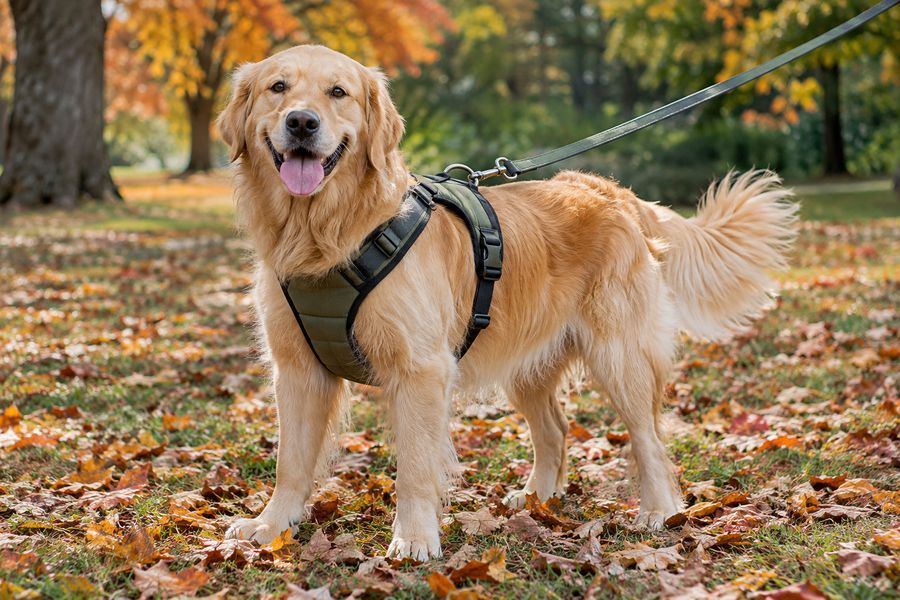
Our pick Front-clip padded dog harness with two leash points
A front clip gives you gentle steering for pullers, and the second clip lets you switch for calm walks.
We may earn a commission if you buy through links in this guide. How we make money
Most dogs do best with both: a flat collar that carries ID tags and a harness for walks. The collar is for identification. The harness is for pulling, because it spreads pressure across the chest instead of pressing on the neck.
A collar alone is fine for a dog that walks calmly beside you. A harness is the better walk choice for pullers, small breeds with delicate necks, and dogs with breathing or neck issues. Ask your vet if you are not sure.
Why the neck matters
A dog that lunges on a collar puts the whole force on the throat. Many owners prefer a harness for that reason, especially with short-nosed breeds such as pugs and bulldogs, and with small dogs like Chihuahuas and Yorkies. If your dog coughs, gags or wheezes on walks, talk to your vet rather than guessing.
Harness types
Back-clip harness
The leash attaches between the shoulder blades. Comfortable and easy to put on. It can make some strong dogs pull harder, since pulling against the chest feels natural to them.
Front-clip harness
The leash attaches at the chest. When the dog pulls, they are turned slightly toward you, which discourages pulling. Many trainers like this style for dogs still learning leash manners.
Dual-clip harness
Has both points. Use the front clip for training walks and the back clip for relaxed ones. A good all-round pick for most households.
Step-in harness
The dog steps into two loops, and you clip it at the back. Handy for small dogs and dogs that dislike things going over their heads.
Collar, harness, or head halter
| Gear | Best for | Watch for |
|---|---|---|
| Flat collar | ID tags, calm walkers | Pressure on the neck if the dog pulls |
| Martingale collar | Dogs with narrow heads, like greyhounds, that slip collars | Needs proper fit so it does not over-tighten |
| Back-clip harness | Small dogs, easy walkers | Can encourage pulling |
| Front-clip or dual-clip harness | Pullers, training | Leash can tangle in front legs if the dog zig-zags |
| Head halter | Strong pullers, with training help | Needs gradual introduction, not a first choice for most |
Popular harness lines to compare include Ruffwear Front Range, Julius-K9 and 2 Hounds Design.
Getting the fit right
- Measure your dog's chest at the widest point, behind the front legs, with a soft tape.
- Pick the size from the maker's chart, not from a guess based on weight alone.
- Adjust straps until you can slide two fingers under any strap, no more.
- Check that the straps do not rub behind the front legs, and that the dog can move shoulders freely.
- Walk a few steps indoors first. A dog that freezes or backs out needs a different size or style.
Growing puppies need a new size every few months. Recheck fit often.
Other things worth having
- A 4- to 6-foot leash. Retractable leashes give less control near roads.
- Reflective strips for evening walks in autumn and winter.
- A tag with your phone number, even if the dog is microchipped.
If your dog's other habit is chewing the leash or everything else, see chew toys that stand up to strong chewers.
Materials and features worth checking
- Padding. Soft padding across the chest helps thin-coated dogs, such as greyhounds and pit bull types, avoid rubbing.
- Breathable mesh. Good for hot weather and fluffy dogs, though it can wear out sooner than tougher fabric.
- Webbing and buckles. Heavier nylon with metal or sturdy plastic hardware suits large, strong dogs.
- Handle on the back. A grab handle helps you steady a dog on stairs, in cars, or near traffic.
- Reflective stitching. Easy to find and useful in short winter daylight.
Rain gear and long-haired dogs add one more point: wet fabric and long coats can cause friction. Rinse and air-dry the harness, and brush out mats under the straps before every walk.
Also think about the car. Some harnesses are tested for use with seat belts, while ordinary walking harnesses are not. If you want one for travel, look for a model whose maker states it was designed for that, and read the details rather than assuming.
Quick answers
Will a harness make my dog pull more?
Some back-clip harnesses can. A front-clip style and some basic training usually help.
Can a dog wear a harness all day?
Not ideal. Take it off at home to prevent rubbing and skin irritation. Keep the collar with ID on.
Should I get a harness for a puppy?
Yes, a light adjustable one works well for early leash lessons. Check fit every few weeks.
The bottom line
Keep a flat collar for tags and use a well-fitted harness for walks, ideally a dual-clip one. It is kinder to the neck, easier to control, and works for most dogs. For persistent pulling, a trainer will do more than any piece of gear.