Ceramic, Hard-Anodized or Carbon Steel: Picking a Nonstick Pan
Three pan types, three different ideas of "nonstick." Here is how ceramic, hard-anodized aluminum and carbon steel differ in lifespan, care and cooking style.
Our pick Hard-anodized aluminum nonstick 10-inch skillet
It heats evenly, costs less than most steel pans, and forgives sloppy habits better than the other two.
We may earn a commission if you buy through links in this guide. How we make money
No pan is permanently nonstick. Every option on the shelf either wears out a coating or asks you to build and keep a surface yourself. So the real question is which kind of effort you want to put in.
Short version: hard-anodized nonstick is the easy daily pan, ceramic is a gentler-looking but shorter-lived choice, and carbon steel is the one that lasts decades if you learn its habits.
How each surface actually works
Hard-anodized aluminum with a PTFE coating. The body is aluminum that has been treated to make it harder and less reactive. The slick layer on top is a PTFE-based coating, the classic nonstick. Eggs slide, cleanup is a wipe, and the pan weighs little.
Ceramic. A sol-gel coating, usually sprayed over aluminum, that is marketed as PTFE-free. It starts out very slick. Many owners report that the slickness fades sooner than with PTFE pans, especially with high heat and aerosol oil sprays. Treat it as a pan with a shorter working life.
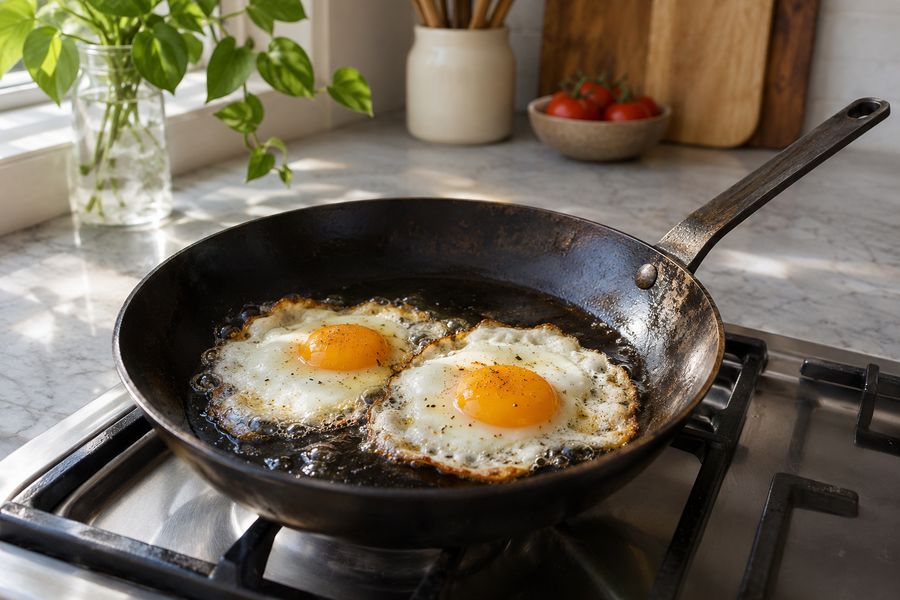
Carbon steel. There is no coating at all. You season the bare metal with thin layers of oil heated until they polymerize, and that dark layer becomes the nonstick surface. It improves with use and can be re-seasoned if it gets scratched or rusty.
Side by side
| Pan type | Nonstick feel | Lifespan | Care | Best for |
|---|---|---|---|---|
| Hard-anodized with PTFE coating | Excellent at first | Several years with gentle use | Hand wash, no metal tools, medium heat | Eggs, pancakes, delicate fish |
| Ceramic coated | Very good at first, fades faster | Often shorter than PTFE | Hand wash, avoid high heat and spray oils | Light everyday cooking |
| Carbon steel | Good once seasoned, improves over time | Decades | Dry right away, oil lightly, re-season as needed | Searing, stir-fry, eggs once you have the hang of it |
Which one suits your kitchen
You want the least fuss
A hard-anodized nonstick skillet in the 10- or 12-inch range. Pairs well with a silicone spatula. Keep the burner at medium or lower and the coating lasts. Plan on replacing it every few years, which is a fair trade for how little attention it needs.
You want to avoid PTFE
Ceramic is the usual answer, and it is a reasonable one if you accept the shorter life. Buy a mid-priced pan rather than the cheapest, check that the handle is oven-safe if you want that, and skip the dishwasher.
You cook hot and like a pan you can keep
A carbon steel skillet, such as a 10- or 12-inch de Buyer or Lodge carbon steel pan. It handles searing temperatures that would ruin a coated pan, goes from stovetop to oven, and gets better with age. The learning curve is real: food sticks while the seasoning is young.
You cook for a crowd
A 12-inch hard-anodized pan with straight-ish sides gives you the most usable flat area. Check the weight before buying, since a full pan with a short handle gets tiring to lift.
How to make any nonstick pan last
- Preheat on medium, not high. Most coatings are not meant for empty pans on a hot burner.
- Cook with a little butter or oil. It protects the surface even on a "no oil needed" pan.
- Use wood, silicone or nylon tools.
- Let the pan cool before washing. Sudden temperature swings stress coatings.
- Stack with a paper towel or pan protector between pans.
If you are shopping for a full set at the same time, our guide to choosing a Dutch oven covers the heavy pot side of the kitchen.
Quick answers
Is a scratched nonstick pan dangerous?
A lightly scratched pan is mostly a performance problem, since food starts sticking. If the coating is flaking or peeling, replace the pan. Manufacturer guidance on temperature limits is worth reading, and a doctor is the person to ask about any health concern.
Can I use metal utensils on carbon steel?
Yes, with some care. A seasoned steel pan tolerates metal better than any coated pan, though hard scraping can strip seasoning in spots.
Do I need all three?
No. One 10-inch nonstick for eggs and one carbon steel or stainless pan for searing covers most home cooking.
The bottom line
If eggs and quick weeknight meals are your main use, buy a hard-anodized nonstick pan and treat it as a replaceable tool. If you want one pan to keep for life and do not mind a break-in period, pick carbon steel. Ceramic fits in between: a decent PTFE-free choice, with a shorter shelf life to match.