Flat Irons Explained: Ceramic, Titanium and Plate Width
Ceramic or titanium, narrow or wide plates, and why adjustable heat matters. A plain guide to choosing a flat iron that fits your hair and your routine.
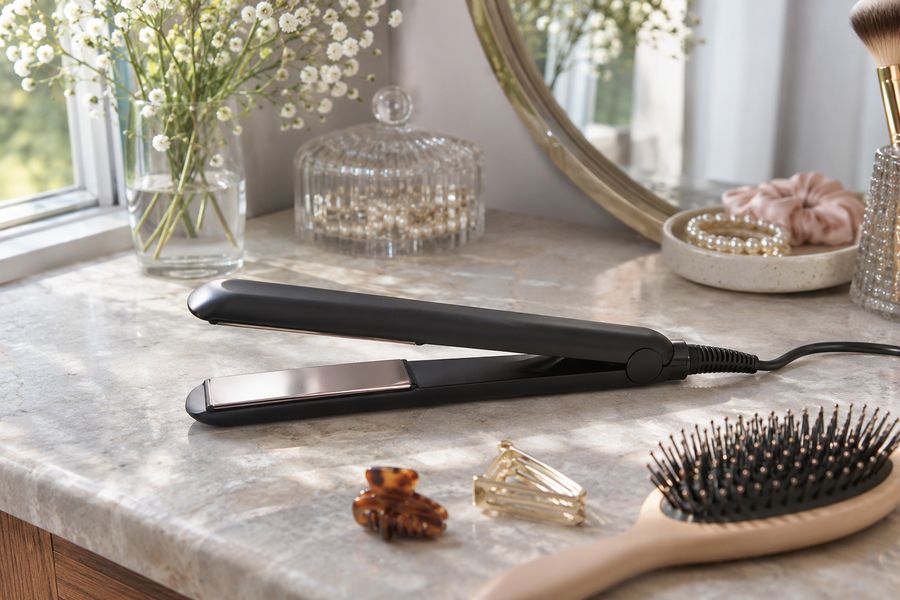
Our pick Ceramic flat iron with adjustable temperature and 1-inch plates
It suits most hair types, offers heat control, and works for both straightening and light curls.
We may earn a commission if you buy through links in this guide. How we make money
The right flat iron comes down to three choices: what the plates are made of, how wide they are, and if you can control the heat. Everything else on the box is mostly marketing.
Get those three right and you get smoother results with less heat on your hair. Get them wrong and you spend every morning going over the same section twice.
Plate material: ceramic, titanium and tourmaline
Ceramic plates heat evenly and run a little gentler. They suit fine, normal and color-treated hair, and they are the safest starting point.
Titanium plates heat up fast and get very hot. They glide well and can handle thick, coarse or stubborn hair. On fine hair they are easy to overdo.
Tourmaline is usually a ceramic or titanium plate with ground tourmaline mixed into the coating. It is sold as a frizz fighter. It may help some people, but it is a bonus, not a core feature.
Single-material labels are not strict, so look at the whole package: even heating, smooth plates and a temperature dial.
Plate width: match it to your hair length
- Under 1 inch: short hair, bangs, tight touch-ups.
- 1 to 1.25 inches: the all-rounder. It straightens and makes waves for most lengths.
- 1.5 to 2 inches: long or thick hair. You pass fewer times, but making curls is harder.
If you only buy one iron and want to curl as well, 1 inch is the safest size. Rounded edges also help, since sharp edges leave creases.
Why heat control matters
Fine or damaged hair usually needs lower heat. Thick, coarse or very curly hair may need more. An iron with a fixed high heat is a risk for anyone in the first group. Look for a dial or digital display with a range, and start low. Raise the temperature only if the hair does not straighten after two slow passes.
A heat protectant spray and dry hair also make a difference. Never straighten wet hair unless the product is clearly made for it. If your hair is breaking, burning or thinning, see a stylist or a dermatologist before adding heat styling.
Comparing flat iron types
| Type | Best for | Trade-off |
|---|---|---|
| Ceramic, adjustable heat | Fine to medium hair, color-treated hair | May need more passes on very coarse hair |
| Titanium, adjustable heat | Thick, coarse or curly hair | Easy to overheat fine hair |
| Ceramic with tourmaline coating | Hair that frizzes in humidity | Costs more, benefit varies |
| Wide-plate iron (1.5 inch plus) | Long, thick hair | Awkward for curls and short hair |
| Mini or travel iron | Bangs, short hair, trips | Slow on long hair |
Names often found in beauty guides: GHD, Remington, BaBylissPRO and T3. Each makes several models, so match the plate type and width first.
How to use one with less damage
- Start with clean, fully dry hair.
- Apply a heat protectant spray and comb it through.
- Set the temperature low, and raise it only if needed.
- Work in thin sections, about an inch wide.
- Make one slow pass per section instead of many fast ones.
- Let hair cool before brushing.
Overnight care counts too. A silk pillowcase can help smooth hair stay smooth between styling days.
Hair type cheat sheet
Hair type changes the answer more than price does, so match your own hair first.
- Fine or thin hair: ceramic plates, low to medium heat, narrow to 1-inch plates. Fine hair loses moisture and bends easily, so it needs the gentlest setting that still works.
- Thick or coarse hair: titanium or wide ceramic plates and a higher heat range. Work in smaller sections so the heat reaches the middle.
- Curly or coily hair: a model with a wide temperature range and plates that glide. Use a comb ahead of the iron, and keep passes slow and even.
- Color-treated or bleached hair: the lowest effective temperature, a heat protectant, and fewer styling days each week.
Also check the cord. A swivel cord of around 6 to 8 feet keeps you from fighting the plug, and an auto shut-off is a good safety feature for busy mornings.
Quick answers
Can I curl with a flat iron?
Yes, with rounded plate edges and a 1-inch width. Twist the iron as you slide down the section.
How hot should it be?
Lower for fine or damaged hair, higher for coarse hair. Start low and adjust. No iron needs to run at its maximum every time.
How long does a flat iron last?
Many last several years with normal use. Replace one if the plates chip, the cord frays or heating becomes uneven.
The bottom line
Start with a ceramic iron, 1-inch plates, and a real temperature control. Move to titanium only if your hair is thick or stubborn, and go wider only if your hair is long and you rarely curl. Use heat protectant, work in thin sections, and keep the temperature as low as still works.