Espresso Machines for Beginners: What Matters at Home
A beginner guide to home espresso: machine types, the features worth paying for, the grinder you cannot skip, and what a realistic first setup looks like.
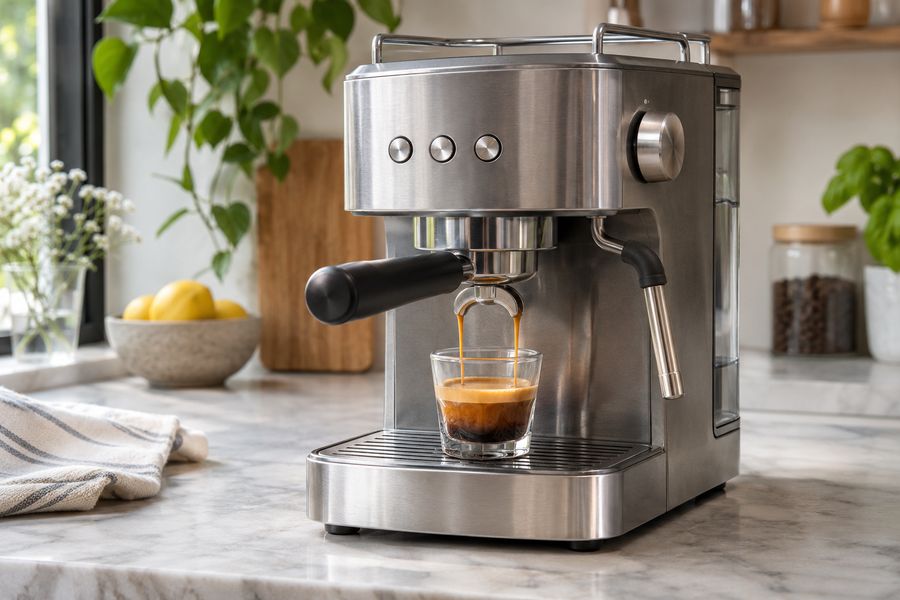
Our pick Entry-level semi-automatic espresso machine with a 15-bar pump
It gives you control over the shot without the learning curve and cost of a manual lever.
We may earn a commission if you buy through links in this guide. How we make money
Good home espresso depends on three things: a machine that holds a steady temperature, a grinder that makes an even fine grind, and fresh beans. Many beginners spend nearly everything on the machine and then wonder why the shots taste sour or bitter. The grinder is usually the culprit.
This guide explains the machine types, what features matter, and how to budget a first setup.
Types of espresso machine
| Type | How it works | Best for |
|---|---|---|
| Manual lever | You pull a lever to push the water | Hobbyists who like hands-on control |
| Semi-automatic | You grind, tamp and start the shot; the pump does the rest | Most beginners who want to learn |
| Automatic or super-automatic | Grinds, tamps and brews at a button press | Convenience over control |
| Capsule or pod | Pre-measured capsules | Speed and minimal cleanup |
The features that matter
- Temperature stability. A good heating system, such as a thermoblock or a small boiler, keeps water steady during the shot. Unsteady heat makes shots inconsistent.
- A real portafilter. A metal basket you fill and lock in gives you a proper shot. A 54 to 58 mm size is common, and parts for those sizes are easy to find.
- A pressurized or non-pressurized basket. Pressurized baskets forgive a sloppy grind and still make crema. They are a fine start. Non-pressurized ones reward better technique.
- A steam wand. You need one for lattes and cappuccinos. A wand that moves freely is easier to learn on.
- Pump pressure. Bar ratings print high numbers. What matters is stable pressure near 9 bar at the coffee, not a bigger number on the box.
- Water tank size and a removable drip tray. Small details that affect daily use.
The grinder is half the setup
Pre-ground coffee goes stale fast and is rarely fine enough for espresso. A burr grinder with stepped or micro-adjustable settings lets you fine-tune the shot. Blade grinders produce uneven pieces and are a poor choice. If your budget is tight, a good grinder with a modest machine beats a fancy machine with a weak grinder.
Plan to spend a similar share on each. Beans matter too: buy whole beans with a roast date, and use them within a few weeks of roasting.
A sensible starter kit
- A semi-automatic machine.
- A burr grinder with fine adjustment.
- A tamper that fits your basket, because the plastic one in the box is often poor.
- A small scale so you can weigh doses and shots. Our guide to kitchen scales covers what to look for.
- A milk jug, if you plan to steam milk.
Dial in by changing only the grind size. A shot that runs too fast and tastes sour needs a finer grind. A shot that drips slowly and tastes bitter needs a coarser one. Aim for a shot of roughly 25 to 30 seconds as a starting point.
Water quality matters as well. Hard water builds scale inside machines, so many people use filtered water and descale on schedule. If you also boil water for tea or pour-over, a temperature-control kettle is a handy partner.
Everyday care
Espresso machines need routine cleaning. Wipe the steam wand right after use, rinse the portafilter and basket, and empty the drip tray often. Run a cleaning cycle or backflush if your machine supports it, and keep the water tank clean. A neglected machine makes bitter coffee no matter how good the beans are.
Also measure your counter. Many home machines are 10 to 12 inches wide, but the grinder and a knock box add to the footprint.
Quick answers
Is a capsule machine real espresso?
It makes an espresso-style drink under pressure. It is convenient, but you cannot control the grind or dose, so it is a different experience.
Do I need to descale my machine?
Yes, regularly. Follow the maker's instructions and use the recommended descaler.
How long does it take to learn?
Expect a few weeks of tasting and adjusting before shots become consistent. That is normal.
The bottom line
For a first machine, pick a semi-automatic with stable temperature and a real portafilter, and pair it with a decent burr grinder. Buy fresh beans and change one thing at a time while you dial in. If you only want a quick cup with no fuss, a super-automatic or capsule machine will serve you better.