Electric Kettles With Temperature Control for Tea and Coffee
See why water temperature changes the taste of tea and coffee, which temperatures to aim for, and which kettle features are worth paying for.
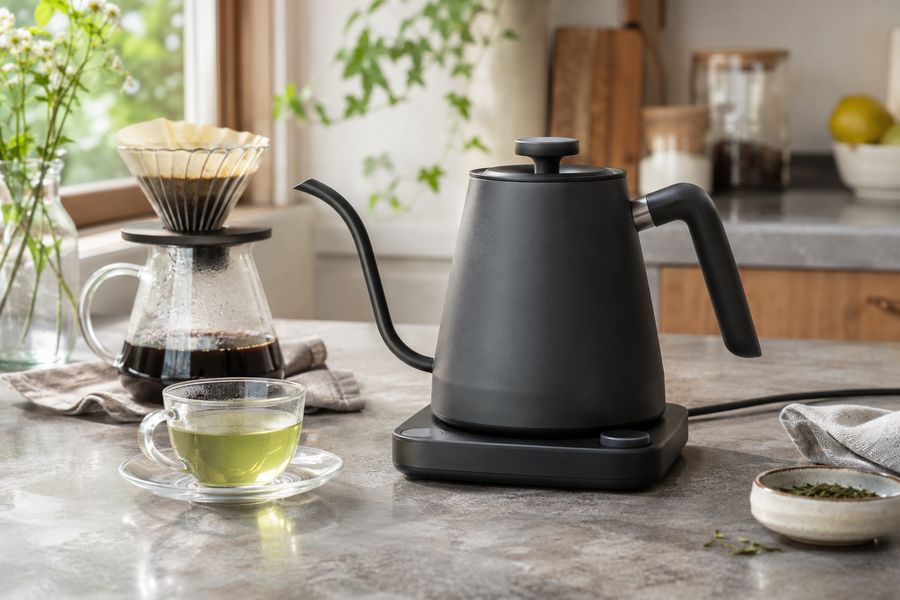
Our pick Gooseneck electric kettle with variable temperature and hold function
It gives precise heat for tea and a slow, controlled pour for coffee in one appliance.
We may earn a commission if you buy through links in this guide. How we make money
Boiling water is too hot for some teas and fine for others. Green tea turns bitter when steeped in water straight off the boil, while black tea and herbal blends do well with it. A kettle with temperature control lets you stop at the right number every time.
Here are the temperatures that work, and the features that separate a useful kettle from an expensive one.
Temperatures to aim for
These are common starting points. Tea makers print their own guidance on the tin, so follow that when it differs.
| Drink | Typical temperature |
|---|---|
| Green tea | 160 to 180 degrees F |
| White tea | 170 to 185 degrees F |
| Oolong | 185 to 205 degrees F |
| Black tea and herbal blends | 200 to 212 degrees F |
| Pour-over coffee | 195 to 205 degrees F |
| Matcha | Around 175 degrees F |
If you are getting into matcha, our matcha at home guide covers the whisk, the bowl and the powder.
Features worth having
- Presets and a dial. Presets for green, white, oolong, black and coffee are handy. A dial or buttons that set exact degrees give more control.
- Hold or keep-warm. Holds the water at your chosen temperature for 30 to 60 minutes, which is useful for multiple cups.
- Gooseneck spout. A narrow, curved spout lets you pour slowly and steadily over coffee grounds. For tea alone, a standard spout is fine.
- Stainless steel or glass interior. Many people prefer to avoid plastic touching hot water. Check where the lid and the spout filter are made from.
- Capacity. 0.8 to 1 liter suits one or two cups. 1.5 to 1.7 liters suits families.
- Auto shut-off and boil-dry protection. A basic safety feature that should be standard.
- Wide mouth. Easier to fill, clean and descale.
Kettle types to consider
- Variable temperature gooseneck kettle. The all-rounder for tea and pour-over.
- Preset-based kettle with a standard spout. Simple and good for tea drinkers.
- Glass kettle with a color-changing light. Lets you see the water, though glass can be heavy.
- Basic one-button kettle. The budget option if you only need boiling water.
- Travel or collapsible kettle. Small and useful for hotel rooms and dorms.
Using and caring for it
- Start with fresh, cold water. Water that has been boiled several times tastes flat.
- Fill between the minimum and maximum lines.
- Pick the temperature before you start heating, not after.
- Rinse the kettle and leave the lid open to dry after use.
- Descale every month or two if you have hard water, with a mix of vinegar and water or a kettle descaler. Follow the maker's instructions.
The same kettle helps if you are learning espresso at home, because you can preheat cups and mugs. We cover the machine side in our beginner espresso guide.
Safety and space
Look for a cool-touch outer wall or a double-wall body, a locking lid and a base with a cord wrap. Keep the kettle on a flat, dry surface away from the cabinet edge, since steam rises from the spout. Measure under your wall cabinets before you buy, because tall gooseneck models can be a tight fit. A short cord is safer than an extension lead for a high-wattage appliance.
Wattage affects speed. Many kettles run at 1,200 to 1,500 watts and heat a full pot in a few minutes. Higher wattage heats faster, but all will do the job for a morning cup.
Quick answers
Is a temperature kettle worth it over a regular one?
If you drink green or white tea, or make pour-over coffee, yes. If you mostly drink black tea or instant coffee, a basic kettle is fine.
Can I just wait for boiling water to cool?
You can, and it is free. A temperature kettle is faster and more consistent, and it removes the guesswork.
Are the displayed temperatures exact?
They are close but can drift a few degrees. A thermometer settles it if you care about precision.
The bottom line
Buy a variable-temperature kettle with a hold function if you drink delicate teas or brew coffee by hand. Add a gooseneck spout only if you pour over grounds. For everyone else, a good basic kettle does the job. Check the materials, the capacity and how easy it is to clean before you pay extra.