Matcha at Home: Whisks, Bowls and Which Grade to Buy
A clear guide to the few tools a home matcha habit needs, and how to read grade labels so you buy the right tin for drinking or for baking.
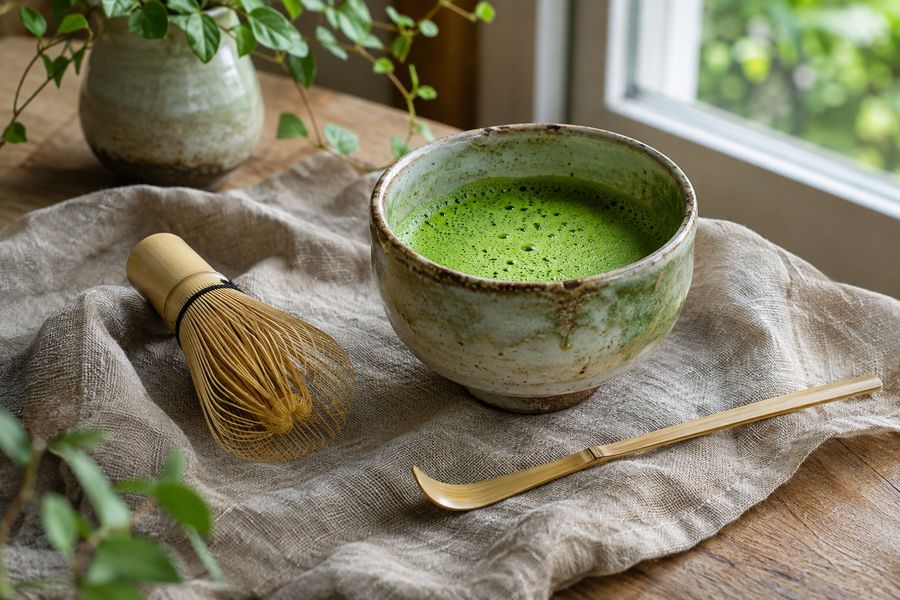
Our pick Bamboo whisk (chasen) with a wide ceramic bowl
The whisk and a wide bowl do the one job that matters, which is breaking up clumps and building a fine foam.
We may earn a commission if you buy through links in this guide. How we make money
Matcha is powdered green tea, so you drink the whole leaf instead of steeping it. That is why the powder, the bowl and the whisk matter more than a fancy kettle. Three things get you a smooth cup: a decent powder, something to sift and whisk it with, and water that is hot but not boiling.
Below is what each tool does, how the grade labels work, and where you can safely spend less.
The tools, in order of importance
You can start with a mug and a small electric frother. Many people stay there for years. But if you want the thin, frothy cup you see in cafes, these are the pieces that earn their space.
- A bamboo whisk (chasen). The fine, curled tines break up clumps and whip in air. A whisk with many tines makes finer foam.
- A wide, round-bottomed bowl (chawan). The shape gives the whisk room to move in a quick zigzag. A cereal bowl works if it is wide and has no sharp inner corners.
- A bamboo scoop (chashaku). It holds about half a teaspoon, which is a rough single serving. A small measuring spoon does the same job.
- A small fine-mesh sieve. Matcha clumps as it sits. Pushing the powder through a sieve first is the cheapest way to avoid lumps.
- A whisk holder (kusenaoshi). A ceramic stand that lets the whisk dry in shape. It is optional, but it keeps the tines from curling in on themselves.
If you already own a kettle with a temperature setting, you are covered on the water side. Our guide to electric kettles with temperature control explains what to look for.
Understanding the grades
Grade names are not regulated the same way everywhere, so treat them as a rough guide and check the seller's own description. The common pattern looks like this.
| Label | Typical use | What to expect |
|---|---|---|
| Ceremonial | Whisked with water only | Brighter green, softer and sweeter, less bitter |
| Premium or daily | Water or milk, lattes | A middle ground that holds up in milk |
| Culinary | Baking, smoothies, ice cream | Stronger, more bitter, often duller in color |
Color is a useful clue. Fresh, well-made matcha is a vivid green. A yellow or brown tint usually means older or lower-quality leaf. Look for a harvest or packing date, and for a country or region of origin. Japan is the traditional source.
How to whisk a good bowl
- Warm the bowl with hot water, then dry it. A cold bowl cools the tea fast.
- Sift about half a teaspoon of matcha into the bowl.
- Add a splash of water, around 2 ounces, heated to roughly 175 degrees F. Boiling water makes it bitter.
- Whisk in a quick W or M motion with your wrist, not your whole arm, for 15 to 20 seconds, until a fine foam covers the top.
- Drink it right away. The powder settles as it sits.
For an iced version, whisk a small concentrate first, then pour it over ice and add cold water or milk. Whisking straight into cold water leaves lumps.
Where to spend and where to save
Spend on the powder, since it is the taste. Save on the bowl. A plain wide bowl from your cupboard is better than a thin decorative one that cools the tea. A whisk is a small cost and wears out in a few months of daily use, so do not overpay for it. Store the tin sealed, away from light and heat, and use it within a month or two of opening for the best flavor.
If you like cold, iced tea drinks in general, you might also be curious about loaded tea, a green-tea-based drink mix that The Loaded Teashop sells as single-serve packets.
Quick answers
Can I use a milk frother instead of a whisk?
Yes. A handheld electric frother mixes matcha well and is fine for lattes. The foam is a little coarser than a whisk makes.
Does matcha contain caffeine?
Yes, since it is made from tea leaves. The amount varies by powder and serving size, so check the product page if you are sensitive to caffeine.
Why is my matcha bitter?
Usually the water is too hot, the powder is too old, or you used a lower grade meant for baking. Cool the water a little and try a smaller scoop.
The bottom line
Buy one bamboo whisk, use a wide bowl you already own, and sift the powder. Choose a ceremonial or daily-grade tin for drinking and keep culinary matcha for baking. That setup is cheap, quick, and makes a cup you will actually want to repeat.