Blackout Curtains and Shades for Light Sleepers
Learn how blackout curtains, shades and liners differ, why light still leaks around the edges, and how to pick one that makes a bedroom properly dark.
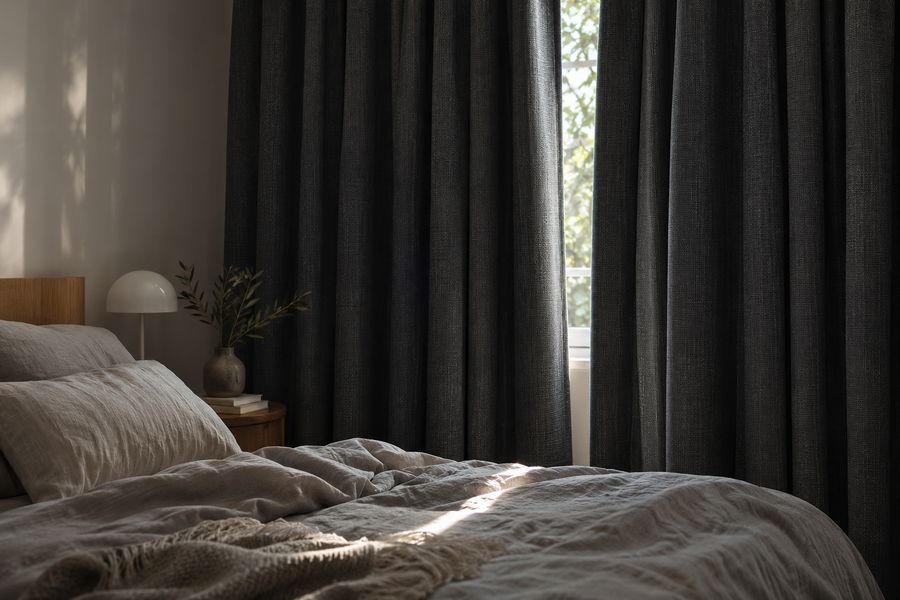
Our pick Triple-weave blackout curtain panels with a wide return
Dense fabric blocks most light, and wide panels hung wide of the frame cut the leaks at the sides.
We may earn a commission if you buy through links in this guide. How we make money
Most of the light that wakes you does not come through the fabric. It leaks around the edges, over the top and through the gap between panels. A good blackout setup is half material and half fit.
This guide covers the main types, what the labels mean, and how to hang them so the room goes properly dark.
Curtains, shades or liners
Each option has a different mix of darkness, price and effort. Pick by how much light you need to stop and whether you rent.
| Type | Darkness | Best for |
|---|---|---|
| Blackout curtain panels | High, but edge leaks remain | Most bedrooms, easy to install |
| Cellular or honeycomb shades | Medium to high, with insulation | Windows where you want a tidy look |
| Roller blackout shades | High when fitted inside the frame | Small windows, nurseries, simple style |
| Blackout liners | Adds darkness to existing curtains | Renters and budget upgrades |
| Temporary adhesive or tension blinds | High, but not pretty | Travel, shift workers, short stays |
What the labels mean
Look at how the fabric is built. A curtain labeled blackout is meant to block nearly all light, usually with a dense weave or a coating on the back. Room darkening is a step lighter and still lets some glow through. Some products use a three-layer, or triple-weave, structure: a face fabric, a dark middle layer and a backing.
Check the color, too. Dark colors absorb more light, but a pale curtain with a proper blackout layer can still work well. Also look at the care label. Coated blackout curtains often need gentle washing.
A word on temperature. Thick curtains can slow heat loss in winter and heat gain in summer, though the effect depends on fit and the window itself. Treat it as a small bonus rather than a promise.
Fixing the leaks
- Go wider than the window. Mount the rod 4 to 6 inches beyond each side of the frame, and make the panels about two to two-and-a-half times as wide as the rod. Fuller panels overlap better.
- Hang them high. Mount the rod a few inches above the frame, or near the ceiling, to block the top gap.
- Choose a wraparound or return rod. It curves the curtain back toward the wall and stops side glare.
- Let them touch the floor or sill. A short curtain leaves a strip of light at the bottom.
- Add a roller shade underneath. The two together cover most leak paths.
- Use magnetic strips or hook-and-loop tape down the sides of a shade for a sealed edge.
Picking one that suits the room
- Measure first. Record the window width and height, plus how far the rod will extend each side.
- Decide inside mount or outside mount for shades. Inside mounts look neat but leave side gaps. Outside mounts cover more.
- Check rod strength. Blackout panels are heavy, and a thin rod can sag in the middle.
- Think about noise. Thick curtains absorb a little sound, which some light sleepers find a bonus.
- Weigh cords. In homes with young children or pets, look for cordless shades.
Darkness is one piece of a better night. Our guide to picking a mattress topper covers another common reason sleep suffers.
Other light sources to handle
Windows are not the only problem. Streetlight, a hallway gap under the door and the glow of chargers and clocks can all keep a light sleeper up. Cover small standby lights with a dab of dark tape, use a door draft stopper along the bottom, and turn screens face down. A sleep mask is a cheap backup for travel or for a window you cannot cover well. Dim, warm lamps in the hour before bed also help the room feel like night.
Quick answers
Do blackout curtains block all the light?
Rarely. Fabric can block nearly all of it, but light still enters around edges. Fit decides the last 10 percent.
Are blackout curtains good for daytime sleep?
Yes. Shift workers often add a liner or shade behind the curtains for the darkest room, along with an eye mask if needed.
Can renters use them?
Yes. Tension rods, adhesive hooks and liners need no drilling, though weight limits apply.
The bottom line
For most bedrooms, buy wide triple-weave blackout panels, hang them high and wide, and let them reach the floor. If light still creeps in, add a roller shade underneath. If you rent, start with liners. Fit beats fabric every time, so measure before you buy.